Live Digital Twins Power Dynamic and Multi-Dimensional Anomaly and Risk Detection

Sarit Kozokin
VP Product
February 22, 2026Share on:


The automotive industry is entering a sophisticated new era where AI no longer lives solely in the digital realm but must navigate and master the physical world. This shift toward Physical AI requires a fundamental rethink of how we monitor and secure mobile assets, including connected vehicles, drones, robotaxis, autonomous robots and more. For GenAI, Agentic AI and moreover Physical AI to make safe, reliable, and intelligent decisions in complex environments, it requires more than just raw data; it requires a living, contextual-aware representation of the asset’s state. The live digital twin provides this essential foundation, serving as the bridge between software-driven functionality and performance and the tangible realities of the road.
Let’s zoom in on connected vehicles. Essentially, the live digital twin is a dynamic, cloud-based state data architecture that mirrors the (near) real-time behavior, software environment, and physical context of every vehicle in operation. Unlike static models, this digital twin evolves with the vehicle, capturing every state change from battery health to sensor calibration. By integrating vehicle command and control, telemetry and API transactions into a live digital twin, OEMs provide Physical AI with the context it needs to distinguish between normal operations and subtle, high-risk anomalies. This foundation allows AI to move beyond simple pattern matching into deep behavioral analysis across two critical dimensions.
Deep Behavioral Baselines Eliminate the Noise of Individual Anomalies
The first dimension of modern detection focuses on the deep historical analysis of the single asset. Every asset develops a distinct behavioral fingerprint based on its usage, driver habits, and geographic environment. A vehicle operating in an arid climate faces different thermal stresses than one in an arctic environment, and its data profile should reflect that reality. By leveraging the live digital twin to establish an asset-specific historical baseline, different organizations within the OEM can leverage it to detect subtle deviations that would otherwise go unnoticed by generic, fleet-wide systems.
This granular intelligence allows a system to distinguish between a benign variation and a response-mandating anomaly. For example, because the digital twin is aware of the specific software version and component history, it can identify a failing inverter or a cyber compromise before the driver ever encounters a warning light.
Dynamic Cohort Intelligence Highlights Systemic Risks
The second dimension elevates detection from a single asset to the power of the crowd. Anomaly detection reaches its full potential when it correlates data across millions of vehicles to identify outlier groups among peers. The live digital twins allow for the instant creation of dynamic cohorts, grouping vehicles by similar attributes or behavioral patterns. This creates a powerful secondary lens: if an individual vehicle’s behavior is “normal” relative to its own history, it may still be “abnormal” when compared to its identical peers.
Consider the challenge of identifying a sophisticated cyber attack or a latent manufacturing defect. If a small subset of vehicles in a specific cohort suddenly demonstrates an identical deviation in energy consumption or communication patterns, it points to a systemic issue. This might indicate a buggy software update or a targeted fleet-wide cyber attack rather than a localized hardware failure. Dynamic cohort analysis allows data teams to isolate variables instantly, providing the clarity needed to determine if a problem is isolated or global.
Mastering the Live Digital Twin Secures Long-Term Operational Resilience
For the C-suite, the value of the live digital twin extends beyond technical monitoring and into the realm of business and operational resilience, as well as long-term competitive positioning in the market. The financial implications of Physical AI are vast. Detecting a component fault in its incubation phase via cohort analysis can prevent a mass recall, saving significant after-sales costs and protecting brand reputation. Furthermore, as vehicles become more reliant on backend services, the digital twin monitors the stateful communications between the car, the cloud and other API-powered services. This stateful awareness is critical to protect against unauthorized feature unlocking, sophisticated fraud, and remote command injection that stateless systems simply cannot catch.
In the modern mobility landscape, you cannot protect what you do not understand. The transition to multi-dimensional detection ensures that data does not just exist but provides the insights required for decisive action.
By looking both deep into the history of a single vehicle and wide across the behavior of the fleet, manufacturers can see the invisible.
This dual perspective ensures that the next generation of Physical AI is built on a foundation of real-world truth, allowing OEMs to deploy advanced features with the confidence that they are monitored by a system as sophisticated as the vehicles themselves.
As we move forward, the live digital twin will not just be a tool for automotive cybersecurity or after-sales quality, but the central nervous system for the entire automotive enterprise. It transforms the vast, overwhelming streams of vehicle data into a strategic asset that drives engineering excellence and operational stability.
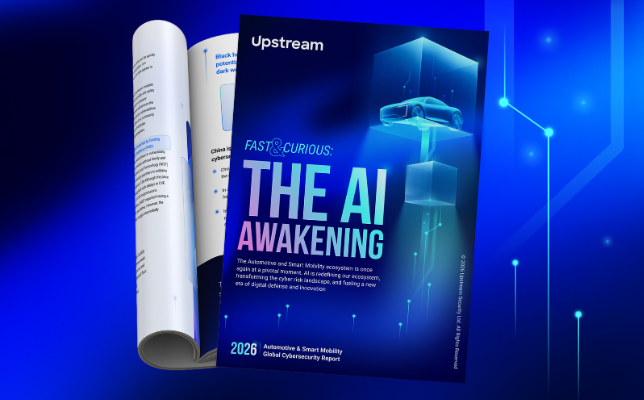
The AI Awakening – 2026 Global Automotive and Smart Mobility Cybersecurity Report
